Email us:
info@andrea-digestive-clinic.comCall us:
+65 6264-2836#21-11/12 Royal Square Medical Centre
Mon - Fri : 9am - 5pm, Sat : 9am - 1pm

Do you often feel bloated, gassy or uncomfortable after drinking milk or enjoying your favourite dairy treats? You might be experiencing lactose intolerance, a common digestive condition that affects many adults in Singapore. While it is usually not serious, persistent symptoms can make mealtimes stressful, limit your food choices and impact your overall nutrition and quality of life.
The good news is that lactose intolerance can be managed effectively with the right guidance. Identifying your triggers, adjusting your diet and knowing which foods to enjoy or avoid can help you live comfortably without giving up the foods you love.
Lactose intolerance is a digestive condition characterised by the body’s reduced ability to digest lactose, the naturally occurring sugar found in milk and dairy products. Lactose digestion normally occurs in the small intestine with the help of lactase, an enzyme that breaks lactose down into glucose and galactose so it can be absorbed into the bloodstream. When lactase levels are insufficient, lactose remains undigested and passes into the large intestine.
In the colon, undigested lactose is fermented by gut bacteria, leading to gas production and fluid shifts that cause bloating, abdominal cramps, diarrhoea and other gastrointestinal symptoms. The severity of symptoms varies between individuals and depends on factors such as enzyme deficiency, portion size and whether lactose is consumed alone or with other foods.

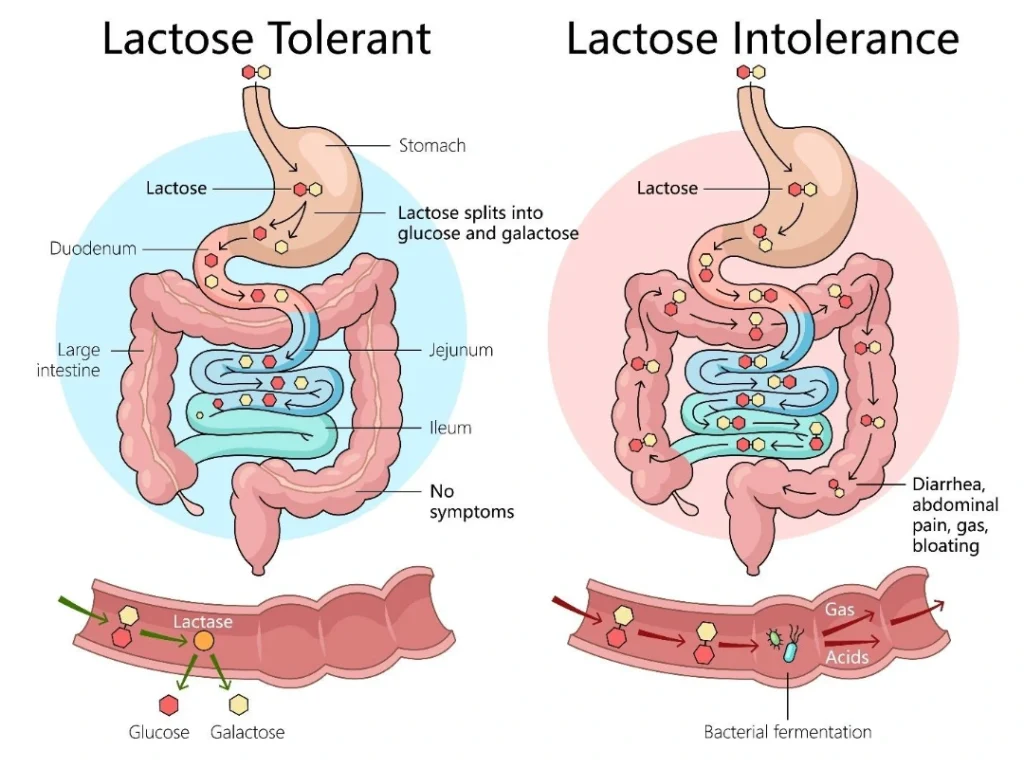
Many adults in Singapore experience lactose intolerance for different reasons. This depends on how and why lactase production in the small intestine is reduced. But generally, it is categorised into the following groups:
Primary lactose intolerance, the most common type, typically develops naturally with age as lactase production gradually declines after childhood. It is the most common type and can appear in adolescence or adulthood, often triggered by consumption of milk, cheese or other dairy products.
Secondary lactose intolerance occurs when another medical condition, such as gastroenteritis, coeliac disease, inflammatory bowel disease (IBD) or medical treatments like chemotherapy, radiation or long-term antibiotics that damages the small intestine. However, symptoms of secondary lactose intolerance may improve once the underlying cause is addressed.
The symptoms usually develop 30 minutes to 2 hours after consuming lactose-containing foods. Some of the common signs include:
Additionally, the severity of symptoms depends on the amount of lactose consumed and the individual enzyme deficiency.
Lactose is naturally present in milk and dairy products, but it can also appear in many processed foods, such as:
| MILK AND DAIRY PRODUCTS | PROCESSED FOODS CONTAINING HIDDEN LACTOSE | CREAM-BASED PRODUCTS |
| ButterCreamMilkSoft cheesesYoghurt | Baked goodsChocolateProtein powdersPuddings | DessertsSaucesSoups |
An accurate diagnosis is essential as it ensures effective management and reduces unnecessary dietary restrictions. The diagnostic measures generally involve a combination of the following processes:
While lactose intolerance cannot be cured, most people achieve significant symptom relief through dietary and lifestyle strategies. The management plan may include:
With proper management, individuals can enjoy a varied diet while reducing discomfort and maintaining nutritional balance.

Persistent digestive discomfort should not be ignored. You should consult a doctor if:

Our care approach is centred on providing clarity beyond a diagnosis. Many individuals seeking help for lactose intolerance already have an understanding of their condition and are looking for more holistic guidance on what comes next.
At our clinic, our gastroenterologist, Dr Andrea Rajnakova, works hand-in-hand with our in-house dietitian, Ms Veronica Cavallini, to support both medical and nutritional aspects of care in a coordinated and consistent manner. This puts us in a unique position as the only gastroenterology clinic in Singapore with an in-house dietitian.
Rather than focusing on investigations alone, the consultations take a broader view of the digestive health, considering how symptoms relate to everyday routines, dietary patterns and longer-term wellbeing. This allows management plans to be tailored to the individual, supporting symptom control while preserving nutritional adequacy and confidence around food choices.
Some patients come to the clinic after previous assessments and are looking for clearer guidance on symptom management and day-to-day dietary decisions. If you are seeking a more considered and personalised approach to lactose intolerance, contact us to arrange a consultation.
Is lactose intolerance the same as a milk allergy?
No. Lactose intolerance is a digestive issue caused by enzyme deficiency, not an immune reaction. Milk allergy involves the immune system and can trigger serious reactions like anaphylaxis.
Can lactose intolerance be cured?
There is no cure, but symptoms can be effectively managed through dietary adjustments and enzyme supplementation.
Is lactose intolerance dangerous?
Lactose intolerance is not life-threatening, but unmanaged symptoms can affect nutrition and quality of life.
Can I still eat dairy if I have lactose intolerance?
Many people can tolerate small amounts of dairy or lactose-free alternatives. Individual tolerance varies, so testing portions gradually is recommended.
Does lactose intolerance cause long-term gut damage?
No. Symptoms result from fermentation of undigested lactose, not from inflammation or intestinal injury.
Should I follow a lactose-free diet permanently?
Not necessarily. Some people tolerate small portions or certain dairy products and lactose-free or low-lactose options can provide adequate nutrition while managing symptoms.