Email us:
info@andrea-digestive-clinic.comCall us:
+65 6264-2836#21-11/12 Royal Square Medical Centre
Mon - Fri : 9am - 5pm, Sat : 9am - 1pm

The hydrogen breath test for fructose intolerance is a clinically recognised, non-invasive investigation used to assess how effectively the body absorbs fructose. It is often recommended for individuals who experience bloating, abdominal discomfort, excessive gas or diarrhoea after consuming fruits, sweeteners or processed foods.
Rather than relying solely on symptom patterns, the test provides objective information about how fructose is processed within the digestive tract. This allows symptoms to be linked more accurately to malabsorption, supporting clearer diagnosis and more targeted dietary management.
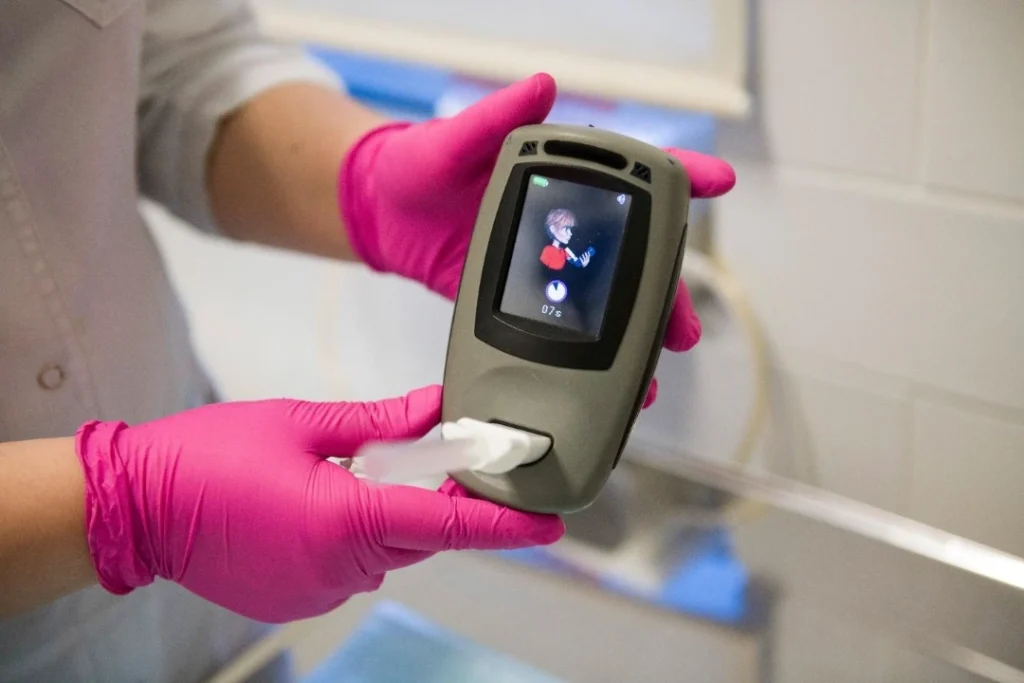
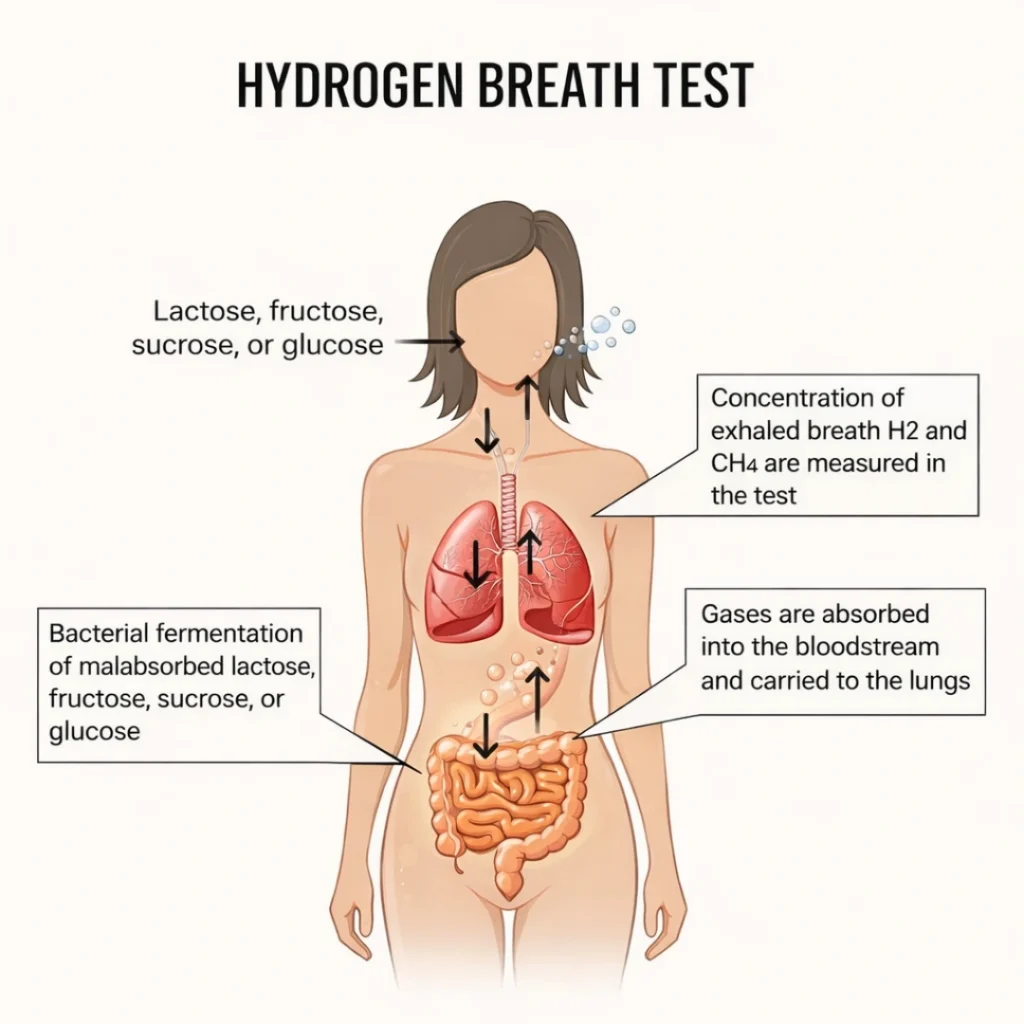
The test follows a structured process designed to track hydrogen levels over time. It entails:
A significant increase in hydrogen during the testing period suggests that fructose is not being absorbed efficiently in the small intestine.
The hydrogen breath test is often recommended when digestive symptoms persist or are difficult to explain. It helps clinicians:
By identifying the underlying mechanism behind symptoms, the test supports more confident and evidence-based care.
The hydrogen breath test is most helpful for individuals who experience ongoing digestive symptoms that may be linked to fructose intake. It is commonly recommended when symptoms persist, vary with diet or remain unexplained despite initial dietary adjustments.
You may be suitable for a hydrogen breath test if you experience:
Hydrogen breath testing is not suitable for everyone and should be considered as part of a broader clinical assessment. A consultation with a gastroenterologist helps determine whether the test is appropriate based on symptoms, medical history and dietary patterns.

The test offers several advantages for individuals with suspected fructose intolerance, such as:
Careful preparation plays an important role in ensuring that hydrogen breath test results are accurate and clinically meaningful. Certain foods, activities and medications can influence baseline hydrogen levels and affect how results are interpreted.
Following the guidelines helps establish a reliable starting point for the test and reduces the likelihood of false or inconclusive findings. You will be expected to:
If preparation guidelines are not followed and baseline readings are unreliable, the test may need to be rescheduled to ensure accurate results.

The results are interpreted by assessing the pattern and magnitude of hydrogen rise over the testing period. Generally, it translates as:
In some cases, alternative approaches may be considered.
A trial of a low-fructose diet may be used to assess symptom response, although this approach relies on subjective improvement and may be influenced by multiple dietary factors. Dietitian-guided elimination and structured reintroduction can also help identify triggers, but may take longer to yield clear conclusions.
Compared to these methods, hydrogen breath testing provides more direct and objective information about fructose absorption.
At our clinic, hydrogen breath testing is supported by coordinated medical and nutritional care. Dr Andrea Rajnakova works closely with the clinic’s in-house dietitian, Ms Veronica Cavallini, allowing test findings to be translated into practical, individualised dietary guidance.
Many patients attending the clinic have already undergone investigations such as endoscopy or colonoscopy and are seeking clarity around functional digestive symptoms. This integrated approach supports informed decision-making and sustainable symptom management beyond testing alone.

If fructose-containing foods have been affecting your digestive comfort, a hydrogen breath test can provide helpful insight into what your body tolerates. A consultation with our gastroenterologist allows you to explore whether hydrogen breath testing is suitable for your symptoms and goals.
With clearer information, many individuals can make more confident dietary choices, improve symptom control and feel more at ease with everyday eating over the long term.
Is the hydrogen breath test safe?
Yes. The test is safe, non-invasive and widely used in clinical practice.
How long does the hydrogen breath test take?
The test usually lasts between one and three hours, depending on the protocol.
Can I drive home after the test?
Yes. The test does not involve sedation or medication that affects alertness.
Will the test cause symptoms?
Some people may experience temporary bloating or discomfort during the test if fructose is poorly absorbed.
Can the hydrogen breath test diagnose inflammatory bowel syndrome (IBS)?
The test does not diagnose IBS, but it can identify fructose malabsorption, which may contribute to IBS-like symptoms.
Do I need to avoid fructose completely after a positive test?
Not necessarily. Results help determine tolerance levels so dietary changes can be individualised rather than overly restrictive.Is hydrogen breath testing available in Singapore?
Yes. Hydrogen breath testing is commonly performed in Singapore at specialised digestive clinics.